
Couples Therapy
Strengthening connection. Working through conflict. Rebuilding trust.
It’s not unusual for relationships to become strained. Recurring conflict, emotional distance, broken trust, or major life changes can leave even loving couples feeling stuck and disconnected.
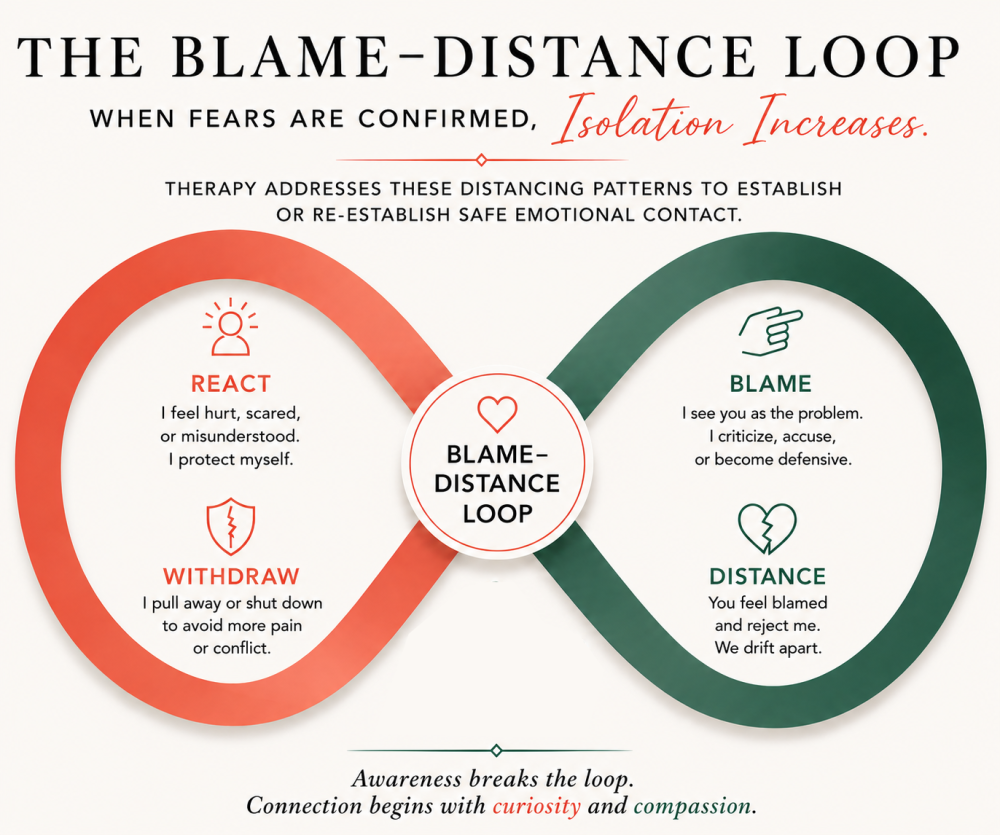
When conflict becomes repetitive, couples can find themselves caught in patterns that seem to take on a life of their own. Hurt and reactivity can lead to blame, criticism, defensiveness, withdrawal, or distance—even when both partners want the relationship to feel better.
In couples therapy, I help you recognize these patterns, understand what keeps them going, and find new ways of responding to one another. The goal isn’t to decide who is right or wrong, but to help you move beyond familiar reactions and create greater understanding, compassion, and connection.
Every relationship has its own history. Whether you are working through conflict, rebuilding trust, deepening intimacy, or simply wanting to feel closer again, our work is tailored to your unique circumstances, needs, and goals.


From Reactivity to Connection
Couples therapy is not simply about learning to communicate more effectively. It is about understanding the emotions and protective patterns beneath conflict - and learning to express what matters most in ways your partner can truly hear.
Beyond Blame and Defense
Beneath much of couples conflict is a fundamental longing: to be seen, heard, and understood by the person who matters most.
When partners are hurt, they can become so focused on protecting and defending themselves that they lose sight of the person in front of them.
I help you recognize the patterns that keep you disconnected, understand what lies beneath these protective responses, and become more able to see and hear one another without immediately defending or withdrawing. Together, we work toward repairing hurt, restoring emotional safety, rebuilding trust, and creating the kind of connection in which intimacy can deepen.
“Reconnection grows from curiosity rather than blame, vulnerability rather than defense, and the experience of truly seeing and being seen.”
How Disconnection Happens
- Something hurts or feels threatening.
- Protective parts are activated.
- We may blame, criticize, defend, or withdraw.
- Beneath those reactions, hurt, fear, or vulnerability goes unspoken.
- We feel misunderstood, and emotional distance grows.
- That distance begins to confirm what each of us feared.
How Reconnection Happens
- We notice when something has been triggered within us.
- We slow down and become curious about what is happening inside.
- We learn to speak for the hurt, fear, or anger rather than from it.
- We seek to understand without immediately defending.
- We respond with curiosity and compassion rather than criticism.
- As we feel more seen and understood, vulnerability becomes safer and emotional connection can deepen.
Connection begins with Curiosity and Compassion.
I know that reaching out to a therapist can feel difficult. It often takes courage to ask for help, and I never take that trust for granted. Working with my patients is something I take very seriously and consider a genuine privilege.
Recurring conflicts often reflect deeper emotional needs or relationship patterns that have never been fully understood or resolved. Therapy helps identify these underlying dynamics so conversations can become more productive.
Yes. Many people discover that long-standing communication patterns can change once they better understand themselves, each other, and the emotional experiences driving those interactions.
Different communication styles are common. Therapy helps each person recognize those differences, develop greater empathy, and learn ways to communicate more effectively together.
Not always. Communication difficulties are often signs of deeper issues such as stress, anxiety, attachment patterns, unresolved hurt, or fear of vulnerability. Exploring those underlying concerns is an important part of meaningful change.
Absolutely. Individual therapy can help you become more aware of your emotional responses, strengthen self-understanding, improve confidence, and develop healthier ways of expressing your thoughts and feelings in all types of relationships.
Whether you’re experiencing recurring conflict, emotional distance, or simply want to communicate with greater clarity and confidence, therapy can help you better understand yourself and strengthen your relationships. Schedule a confidential consultation to begin the conversation.
TESTIMONIALS
Dr. Scantling helped us achieve our goal and so much more. Her teachings are now a part of our daily lives. We think about her often and incorporate her advice regularly. Dr. Scantling helped us take our relationship to a whole new level!
- L & A.
We sought her help when we were struggling to recapture our intimacy and joy. Dr. Sandy worked with us individually and jointly, and guided us back to each other. She challenged each of us, asked hard questions, and helped us give each other grace.
- L.D.

